TBI Biomarkers

TBI Biomarkers Help Tell the Story Symptoms Can’t

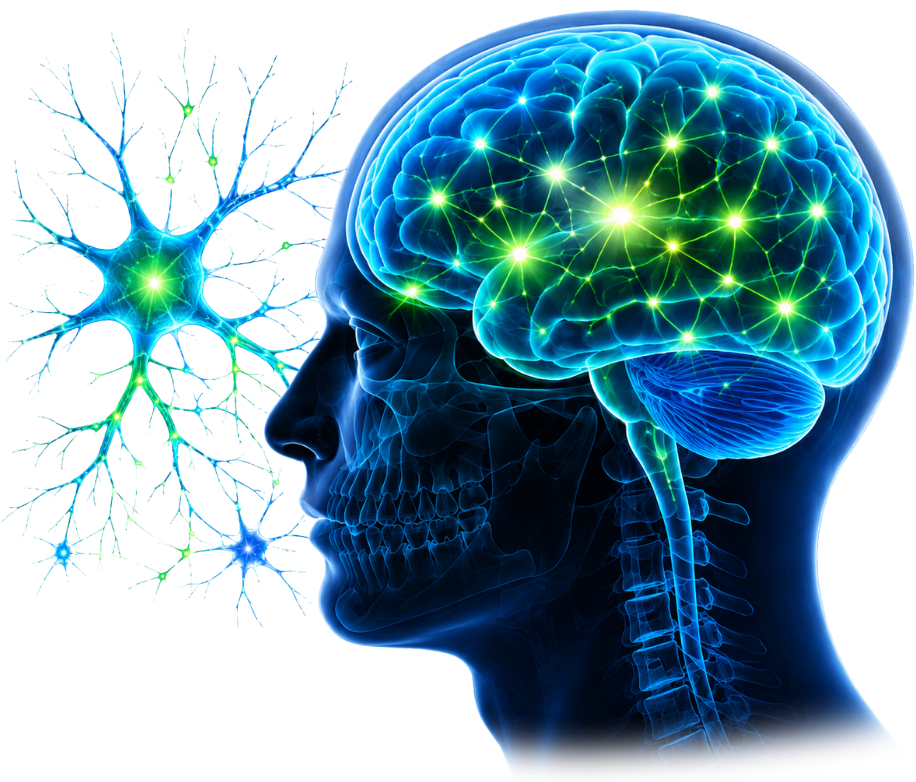
Blood-based biomarkers may help reveal biological changes associated with traumatic brain injury that are not always visible through traditional evaluation methods.

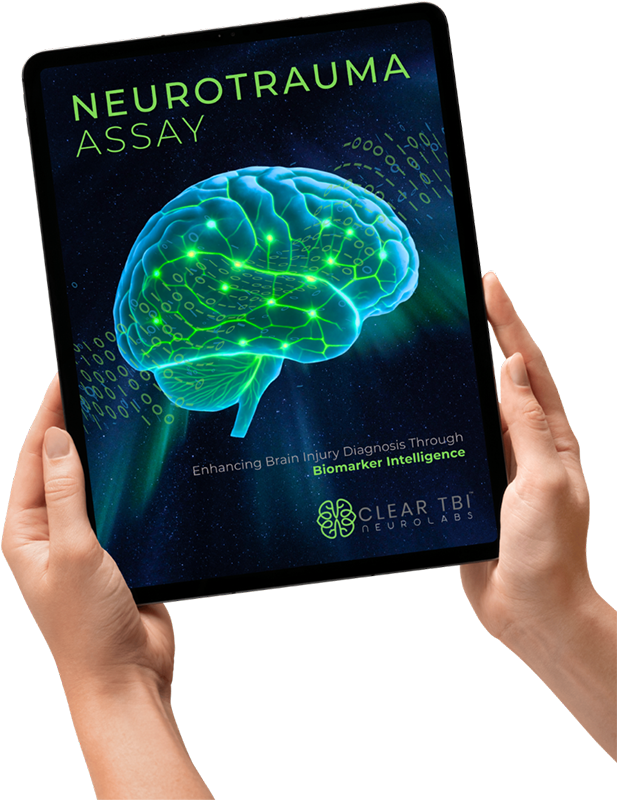
Clear TBI NeuroLabs provides advanced biomarker-based diagnostics designed to support objective TBI evaluation, helping providers gain clinically relevant insight following head trauma.

Objective Data. Clinically Relevant Insight.

Biomarker story

Why Biomarkers Matter in TBI Evaluation

Traumatic brain injury can be difficult to evaluate using symptoms alone. Headache, dizziness, cognitive changes, fatigue, and sensitivity to light or noise may provide important clinical clues, but they do not always show the underlying biological response to injury.

Blood-based biomarkers add another layer of objective information by measuring proteins associated with brain cell injury, astrocyte activation, neuronal damage, and axonal injury. This helps providers better understand what may be happening biologically after a suspected concussion or traumatic brain injury.

Biomarker testing can help support:

Objective Clinical Evaluation

Supports clinical evaluation with measurable biological data.

Data-Driven Decision Making

Helps providers make more informed decisions following head trauma.

Improved Clinical Insight

Provides additional clarity into biological response over time.

Key Biomarkers in TBI Evaluation

Clear TBI NeuroLabs focuses on clinically relevant biomarkers associated with traumatic brain injury, including GFAP, UCH-L1, S100β, and NF-L.

GFAP

GFAP
Glial Fibrillary Acidic Protein

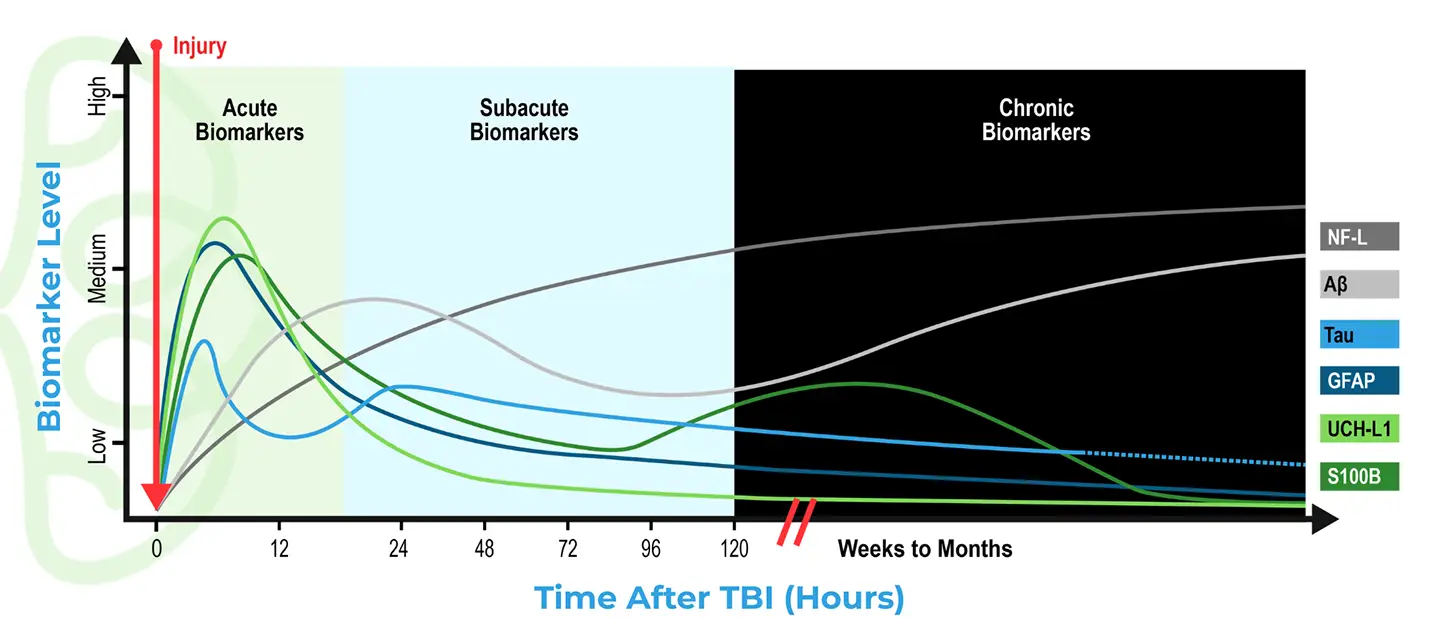
GFAP is a marker of astrocyte injury. Astrocytes are supportive cells in the central nervous system that become activated after neurological damage. GFAP levels can rise within hours after traumatic brain injury and may remain elevated for several days to weeks.

What it may indicate: Astrocyte activation, central nervous system injury, and biological response to brain trauma.
UCH-L1

UCH-L1
Ubiquitin C-Terminal Hydrolase L1

UCH-L1 is associated with neuronal cell body damage. It is abundant in neurons and is released when neuronal injury occurs. UCH-L1 typically rises quickly after injury, often peaking within hours, and may decline more rapidly than some other biomarkers.

What it may indicate: Neuronal damage and acute biological response following traumatic brain injury.

S100B

S100β
S100 Calcium-Binding Protein B

S100β is associated with astrocytic activation and glial cell response. It can rise quickly after injury, but it may be less specific because it can also be influenced by extracranial sources such as muscle, fat tissue, or other non-brain injuries.

What it may indicate: Astrocytic activation and injury response, with clinical interpretation requiring context.

NF-L

NF-L
Neurofilament Light Chain

NF-L is associated with axonal injury. Unlike some acute biomarkers, NF-L may rise more slowly and can remain elevated for months or even years, especially in more severe or persistent injury patterns.

What it may indicate: Axonal injury, diffuse axonal injury severity, and potential long-term neurodegenerative processes.
Timing Matters

Biomarker interpretation depends on timing. Different biomarkers rise, peak, and decline at different points after injury, which makes the timing of collection an important part of clinical interpretation.

Acute Phase: 0–60 Days

GFAP and UCH-L1 can spike within the first 24 hours after injury before declining over weeks and months. During the acute phase, these biomarkers may help provide objective biological data to support clinical evaluation following head trauma.

Subacute Phase: 1–30 Days

NF-L becomes more relevant to severe injuries over time. Because NF-L is associated with axonal injury, it may provide additional insight into ongoing biological response beyond the earliest phase of injury.

Persistent Elevation

Persistent biomarker elevation may indicate long-term neurodegeneration, neuroinflammation, and/or risk of cognitive decline. Monitoring biomarker patterns over time can help providers better understand recovery, ongoing pathology, and care.

A More Complete View of Brain Injury

Current TBI evaluation has historically relied heavily on clinical symptoms, Glasgow Coma Scale scoring, and imaging. While these tools remain important, they do not always reflect the full biological picture of traumatic brain injury.

Biomarker testing supports a more multidimensional approach by adding measurable biological data to the clinical evaluation process. This can help providers better understand injury severity, biological response, and the need for follow-up care.

Clear TBI NeuroLabs:
Objective Insight for Brain Injury Evaluation

In this brief video, Dr. Adam Di Dio introduces Clear TBI NeuroLabs’ approach to supporting concussion and traumatic brain injury evaluation with objective biomarker insight. Watch to learn how blood-based testing can help providers move beyond symptoms alone and add measurable data to the clinical picture.

A New Framework for Understanding TBI

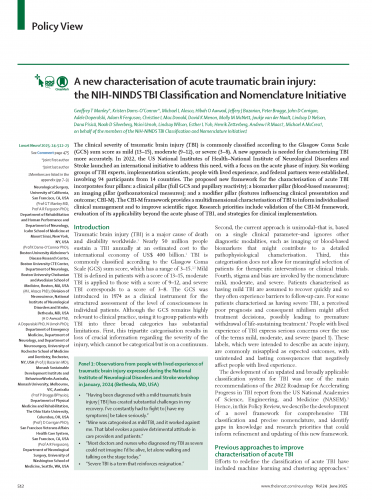
The 2025 NIH-NINDS TBI Classification and Nomenclature Initiative introduced the CBI-M framework, a more multidimensional approach to traumatic brain injury characterization. Rather than relying only on traditional labels such as mild, moderate, or severe, this framework considers clinical findings, blood-based biomarkers, imaging results, and patient-specific modifiers together. For providers, this reinforces the value of adding objective biological data to the broader clinical picture when evaluating concussion and TBI.

Supporting the CBI-M Framework

The NIH-NINDS TBI Classification and Nomenclature Initiative introduced a more comprehensive approach to traumatic brain injury characterization through the CBI-M framework:

  • Clinical – Symptoms, Glasgow Coma Scale, pupillary response, post-traumatic amnesia, and other clinical findings.
  • Biomarker – Blood-based indicators of tissue damage at macrostructural and microstructural levels.
  • Imaging – CT, MRI, and other imaging findings when clinically appropriate.
  • Modifier – Patient-specific and injury-related factors that may influence presentation, recovery, and outcome.

Clear TBI NeuroLabs supports the biomarker pillar by helping providers add objective biological data to the broader clinical picture.

How Biomarker Testing
Supports Providers

Clear TBI NeuroLabs helps providers move beyond symptom-only evaluation by offering biomarker-based testing that may support:

  • Clinical evaluation after head trauma
  • More informed follow-up decisions
  • Objective documentation of biological response
  • Insight into acute, subacute, and persistent injury patterns
  • Improved understanding of injury biology over time

Biomarker testing does not replace clinical judgment, imaging, or neurological evaluation. Instead, it adds objective data that may help providers evaluate traumatic brain injury with greater clarity.

Clear TBI Neurotrauma Assay

Bring Objective Data Into TBI Care

Clear TBI NeuroLabs provides advanced biomarker-based diagnostics for objective TBI evaluation. By combining measurable biological data with clinical context, providers can gain deeper insight into traumatic brain injury and better support patient care.

Objective Data. Clinically Relevant Insight. Contact us today.

Scroll to Top